







How a neon sign works, explained by our engineering team: how an SMD 2835 LED seated in a CNC-routed acrylic panel becomes a smooth, dot-free glowing line, how the low-voltage driver powers it, and how glass neon, LED acrylic neon and LED neon flex differ at the circuit level.
Written by Kay Sun, Senior Technical Lead, LED Signs Pro — reviewed by our in-house engineering team for technical accuracy.
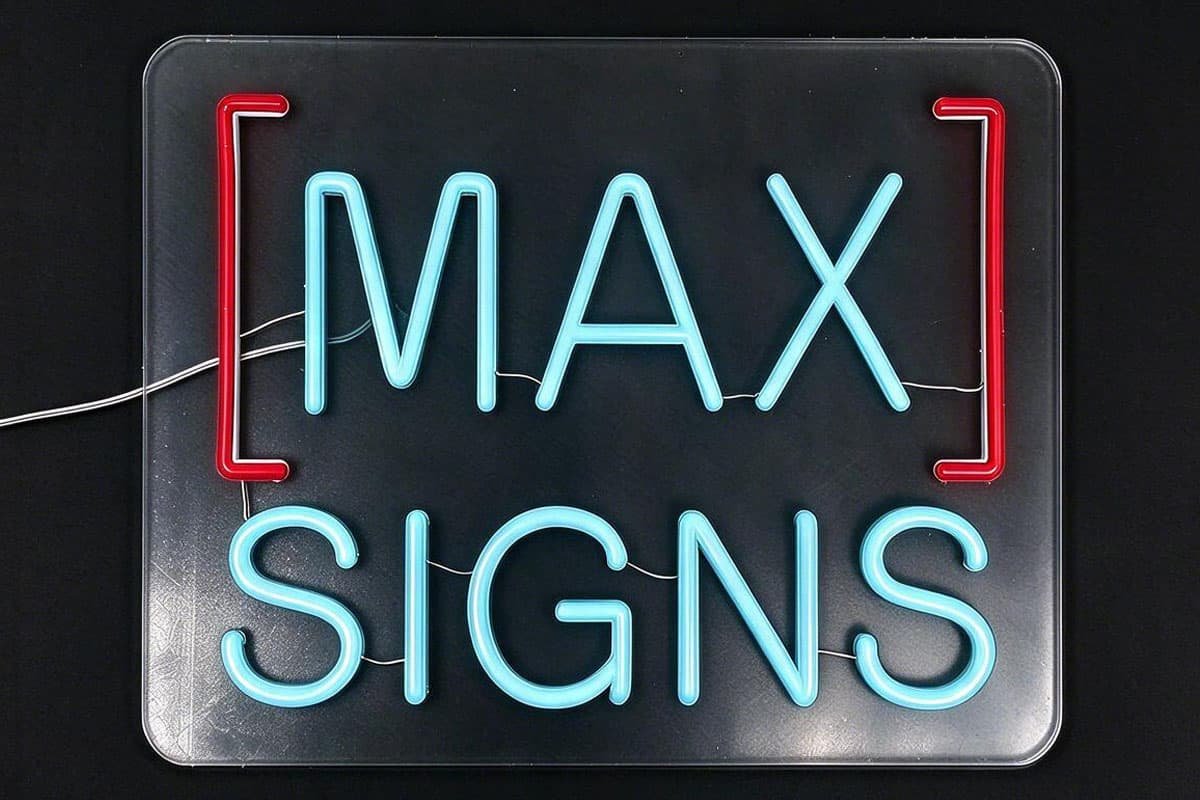
A modern LED neon sign works by seating a flexible LED strip inside a groove CNC-routed into a rigid acrylic panel, then capping it with a silicone diffuser. Each tiny SMD 2835 LED emits light as a point; the diffuser spreads those points into one continuous, dot-free line that looks like a traditional neon tube. The whole sign runs on low-voltage DC (12 V / 24 V) through a driver — not the thousands of volts a glass neon sign needs. That is the short answer; the rest of this guide explains each step at the engineering level.
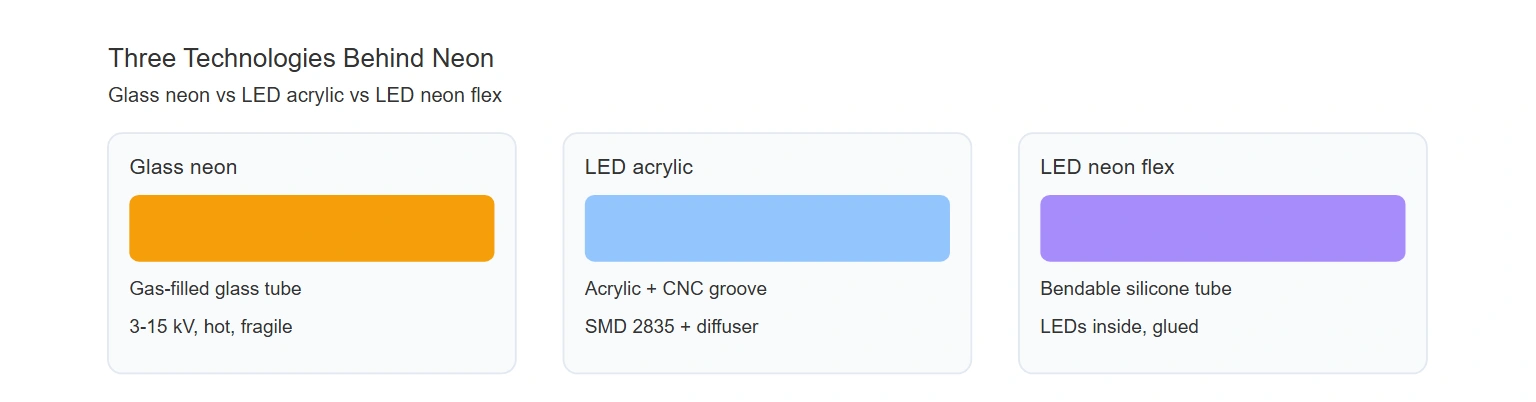
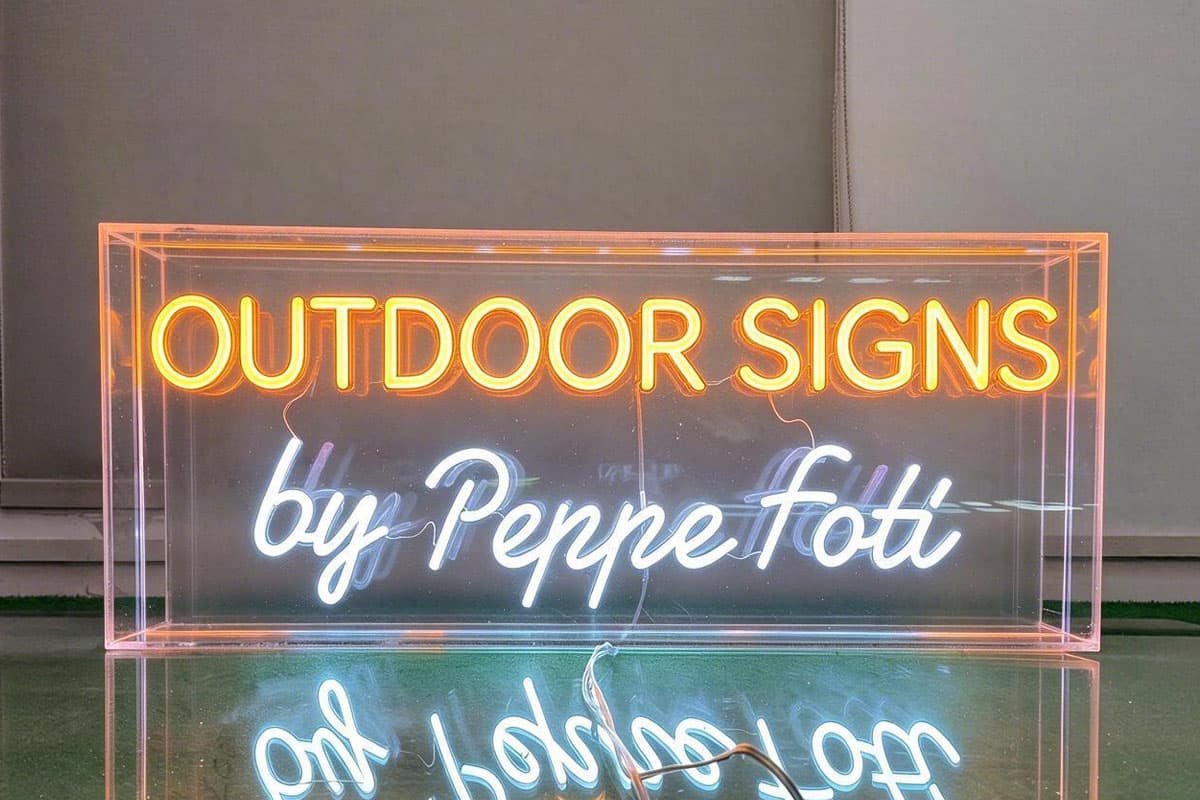
Strictly, “neon” is a gas. A classic neon sign is a hand-bent glass tube filled with neon or argon gas, lit by a high-voltage transformer. A modern “LED neon sign” — the kind most businesses buy today — reproduces the same look using LEDs, with no gas and no glass. When people ask how does a neon sign work, they usually mean the LED kind, so this guide covers both and then focuses on LED.
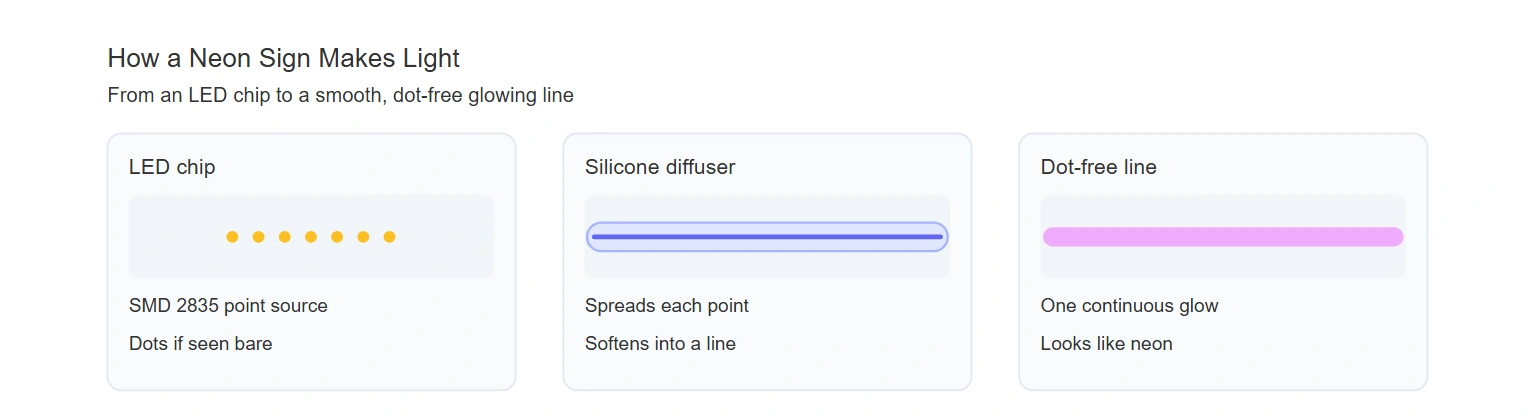
At the core of every LED neon sign is an SMD 2835 chip — the same chip class used in general lighting. When current flows through it, electrons recombine inside the semiconductor and release photons: light. Each chip is a point source, and a row of point sources looks dotted, not like neon. The engineering fix is the silicone diffuser, a translucent jacket that spreads each point of light sideways until the individual LEDs merge into one unbroken line. That single idea — chip, groove, diffuser — is the entire working principle of an LED neon sign.
See the full comparison in our neon vs LED guide.
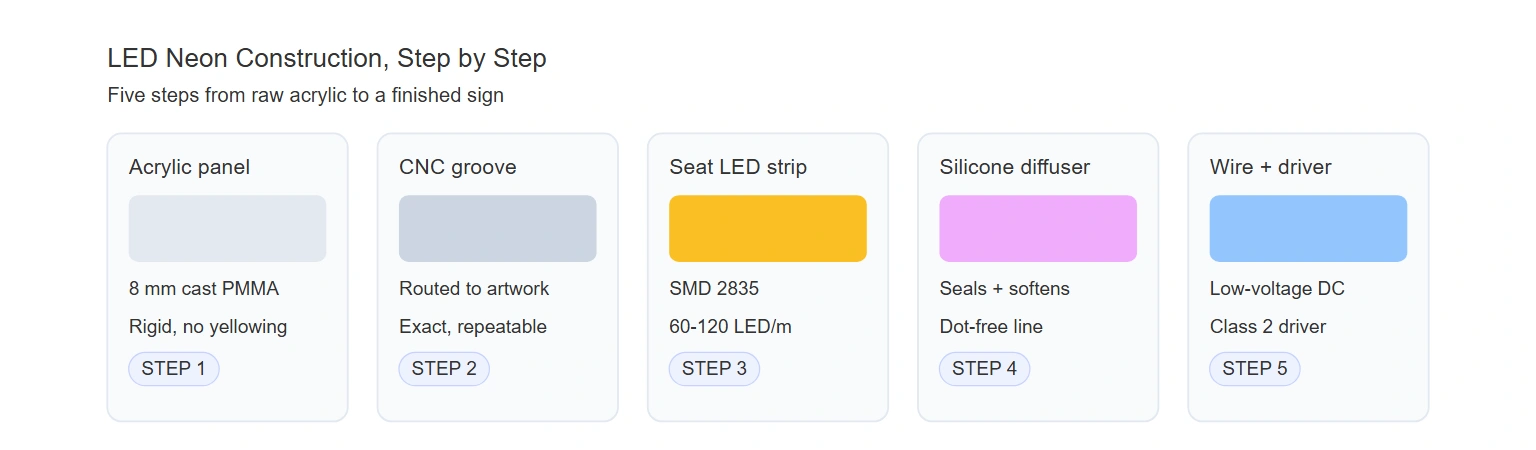
Every LED neon sign is built in the same five steps:
This is where LED neon and glass neon part ways. Glass neon runs on thousands of volts and must be installed by a licensed sign electrician. LED neon runs on a Class 2 low-voltage output: mains AC 110–220 V goes into the driver on the input side, and the driver outputs a safe 12 V / 24 V DC to the sign. The Class 2 safety rating is on the AC input side — that is what makes the sign safe to touch, cheap to insure and simple to sign off with a landlord.
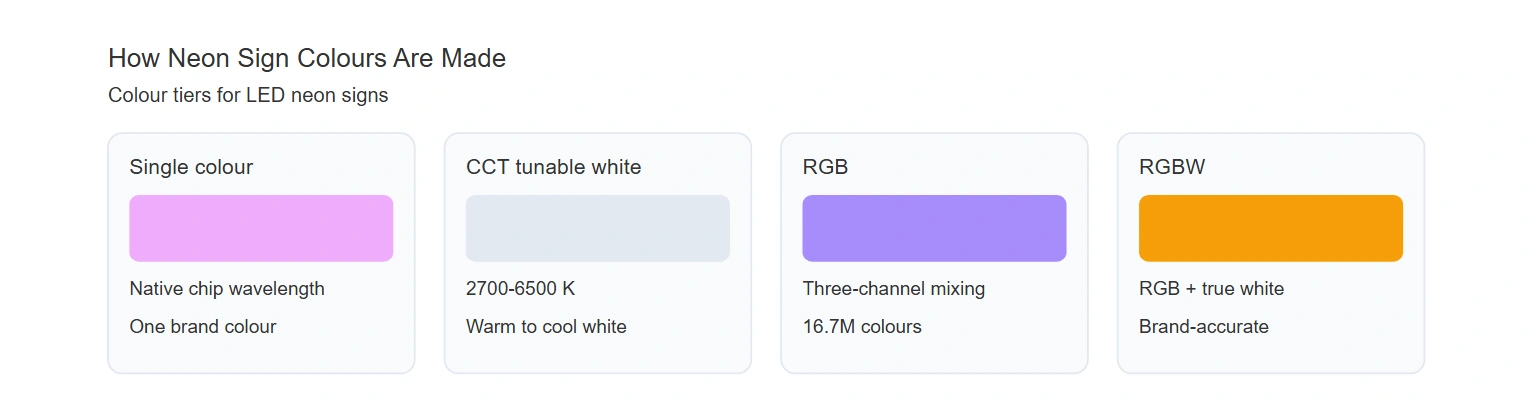
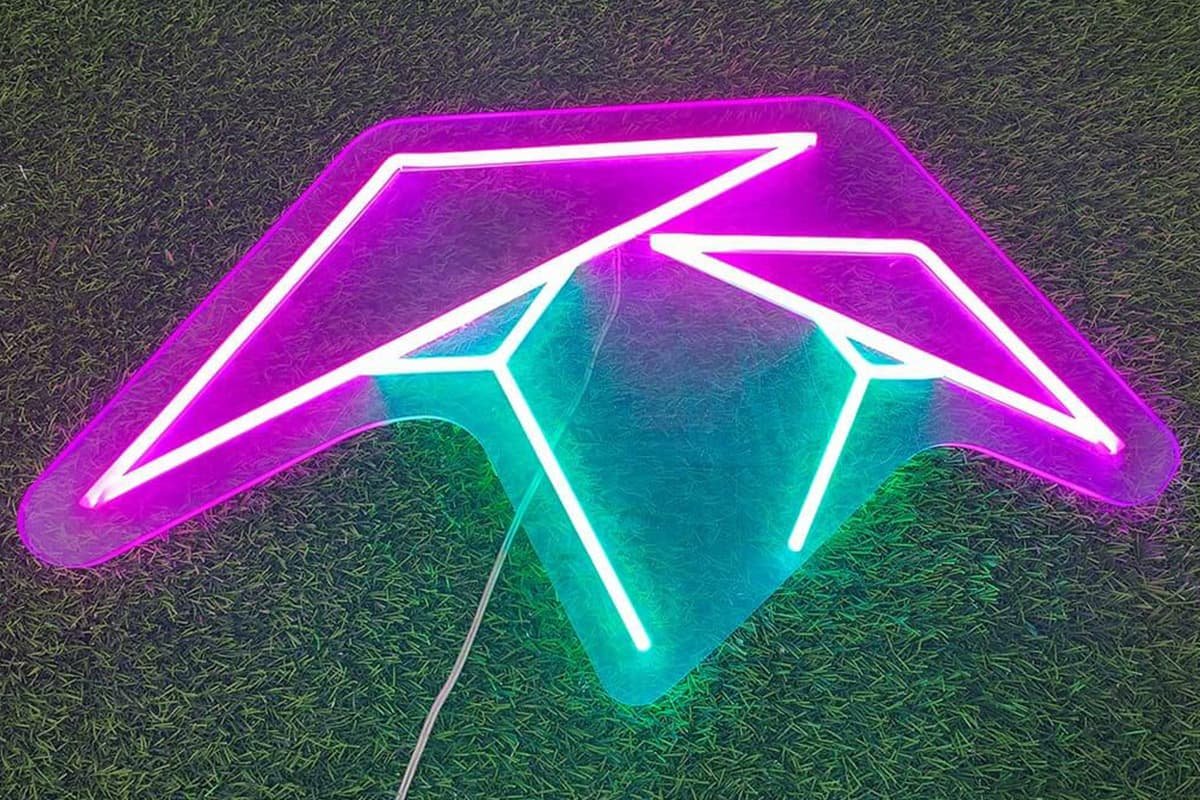
Neon sign colour is a property of the LED and the controller, not the gas. A single-colour sign uses a chip that emits one wavelength (or one Kelvin point for white); CCT tunable white mixes warm and cool LEDs for 2700–6500 K; RGB mixes red, green and blue channels to synthesise up to 16.7M colours; and RGBW adds a dedicated white channel for brand-accurate colour plus true white. The colour tier changes the driver and controller, so it is specified before ordering.
The difference between a professional neon sign and a cheap import is optical, not brightness. With 120 LED/m and a proper silicone diffuser, the individual LEDs disappear into a solid stroke; with 60 LED/m you may see faint dotting only at very close range. The diffuser is the single component that turns “a row of LEDs” into “neon”, which is why it is the part we never substitute.
LED neon is rated for 50,000+ hours under LM-80 — roughly 10+ years of daily use — with essentially no maintenance. The two things that age a sign are LED lumen depreciation and material yellowing. We use LM-80-rated chips and UV-stable silicone over cast PMMA, so the sign neither dims noticeably nor turns yellow under normal commercial lighting.
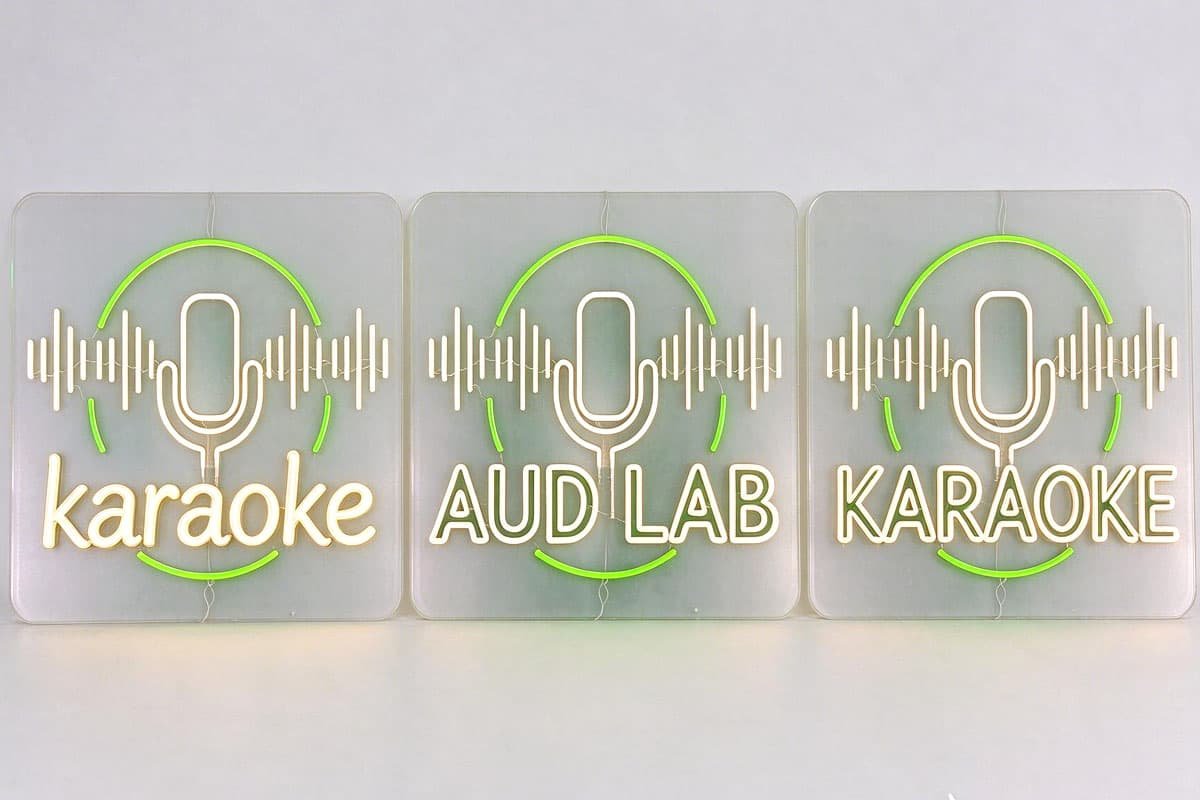
A constant-voltage driver feeds the strip and must be sized with headroom — an undersized driver causes voltage drop, so the far end of a long sign dims. For dimming, the driver pairs with a trailing-edge dimmer or an RF / Wi-Fi / DMX512 controller, so the same sign can run full-bright over a bar by day and soft in a lounge by night.
| Parameter | Specification |
|---|---|
| Panel material | 8 mm cast PMMA acrylic |
| Construction | CNC-carved groove + seated SMD 2835 strip + silicone diffuser |
| LED type | SMD 2835, 60–120 LED/m, 3000–6500 K |
| Working voltage | AC 110-220 V input (Class 2 driver) · 12 V / 24 V DC output |
| Dimming | Trailing-edge / RF / Wi-Fi / app / DMX512 (optional) |
| Waterproofing | IP44 standard, IP65–IP68 for window / outdoor |
| Lifespan | 50,000+ hours (LM-80 rated LED) |
| Colour options | Single / CCT / RGB / RGBW / RGBIC / addressable |
| Certification | CE, RoHS, UL-listed components |
| Warranty | 2 years |
An LED neon sign works by seating an SMD 2835 LED strip inside a groove CNC-routed into an 8 mm acrylic panel and capping it with a silicone diffuser. The diffuser spreads each LED point of light into one continuous, dot-free line, and a Class 2 driver powers the whole sign at safe low-voltage DC.
Technically no. Real neon is a gas discharge in a glass tube at high voltage. An LED neon sign reproduces the look with LEDs, no gas and no glass – safer, more durable and far cheaper to run, which is why businesses buy LED neon today.
A glass neon sign runs on 3,000-15,000 V. An LED neon sign runs on low voltage: AC 110-220 V goes into a Class 2 driver on the input side, and the driver outputs 12 V / 24 V DC to the sign.
LED neon uses roughly 80% less energy than an equivalent glass neon sign, because the high-voltage transformer in glass neon draws power continuously. A typical LED neon sign runs on just a few watts per metre.
A well-built LED neon sign is rated for 50,000+ hours under LM-80 – roughly 10+ years of daily use – because there is no gas to deplete and no glass tube to fail.
Colour comes from the LED and controller: a single-colour chip emits one wavelength, CCT mixes warm and cool white, RGB mixes three channels for up to 16.7M colours, and RGBW adds a true white channel.
Send your artwork and we’ll build it on 8 mm acrylic with an SMD 2835 strip and silicone diffuser — and answer any technical question before you commit. Free engineering drawing and exact quote.

I. Engineering Analysis of LED Signage Technology Architecture 1.1 Quantum Leap in Luminescence Principles The core of LED (Light Emitting…

LED signs have revolutionized signage and decorative lighting, merging cutting-edge technology with artistic expression. While their popularity is undeniable, truly…

Brightness is the specification that decides whether a sign actually does its job. A sign that is invisible in afternoon…